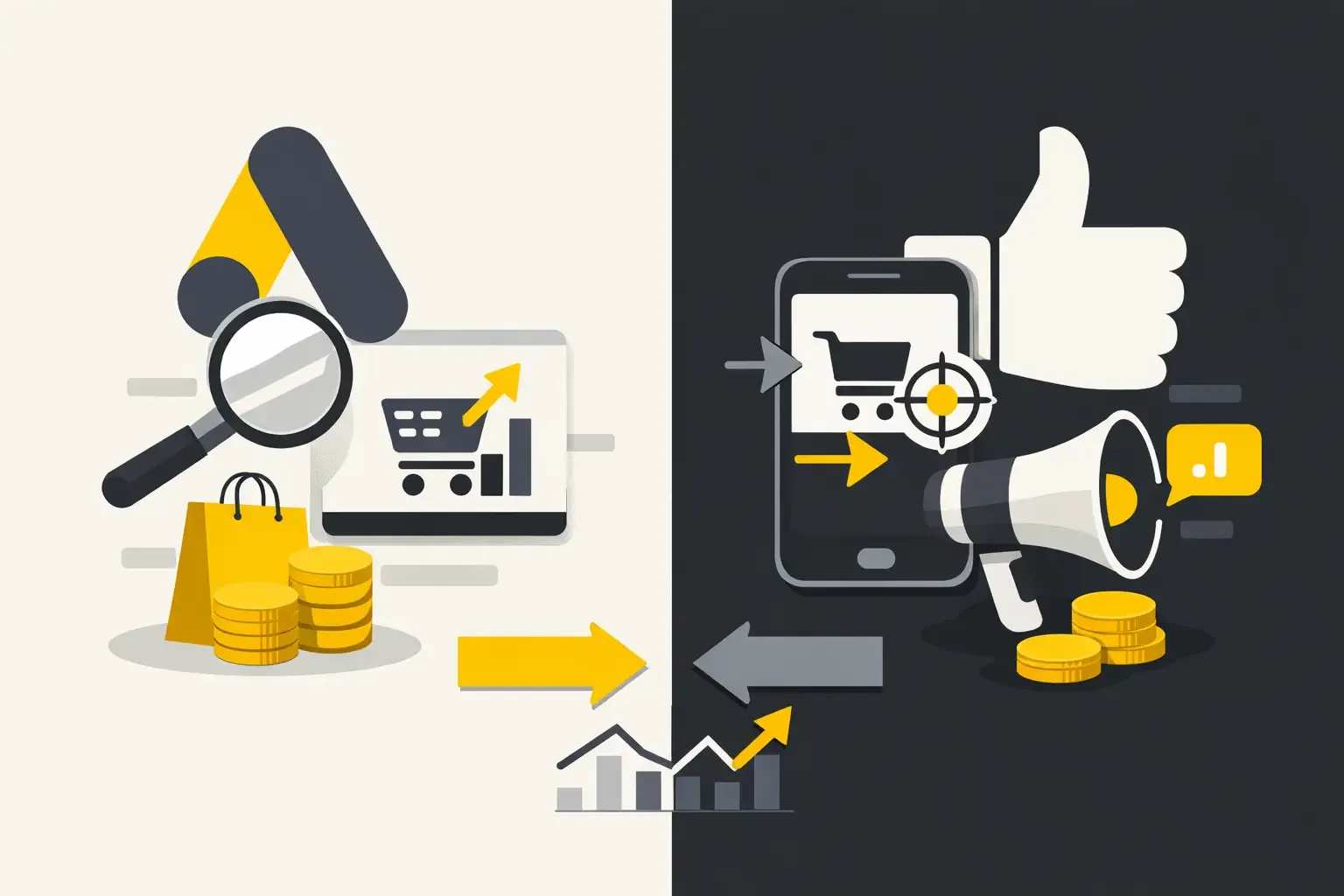
A person searching “emergency plumber Melbourne” and a person scrolling Facebook after dinner are not in the same buying mode. That is the real difference in Google Ads vs Facebook Ads. One captures demand that already exists. The other creates demand before a buyer starts searching.
Both can grow your business. Both can also waste money fast when the campaign, offer and landing page do not match how people use the platform. The right choice comes down to what you sell, how urgently people need it, your sales cycle and what a profitable customer is worth to you.
Google Ads vs Facebook Ads: the core difference
Google Ads is primarily an intent channel. Your ads can appear when someone actively searches for a product, service or solution. If they search “commercial cleaning quote”, “buy protein powder Australia” or “family lawyer near me”, they are telling you what they want right now.
Facebook Ads, delivered through Meta’s platforms, is primarily an interruption and discovery channel. Your audience may not be searching for your offer. You use creative, targeting and a strong message to earn their attention while they browse Facebook or Instagram.
That distinction affects everything: your creative, budget, conversion rate and time to revenue. Google often produces leads with stronger immediate intent. Facebook often gives you more control over who sees your offer and can build demand at scale.
Neither platform wins by default. The best channel is the one that brings in profitable customers at a cost your business can sustain.
When Google Ads is the better investment
Google Ads is usually the first paid channel to test when customers already search for what you sell. It is particularly effective for local services, high-intent professional services, healthcare providers, urgent repairs and eCommerce products with clear search demand.
A Melbourne electrician does not need to convince someone that a power fault needs fixing. They need to show up when the customer searches. A law firm handling a time-sensitive matter faces a similar situation. In these cases, search advertising puts your business in front of people close to taking action.
Google Ads can work across several campaign types. Search campaigns target keyword searches. Shopping campaigns showcase products and prices. Performance Max can use Google’s inventory across Search, Shopping, YouTube, Display and more. The right mix depends on your business model and the quality of your conversion data.
The commercial upside is clear: you can connect spend to calls, form enquiries, purchases and revenue. But high intent comes at a price. Competitive keywords in legal, finance, trades and healthcare can carry high costs per click. You need tight keyword targeting, negative keywords, convincing ads and a landing page that answers the searcher’s question quickly.
Google Ads is not a set-and-forget lead machine. Broad keywords, weak tracking or traffic sent to a generic homepage can burn through a budget without producing qualified leads.
Google Ads works best when buyers are searching now
Prioritise Google Ads if your customers know what they need, search before buying and can take action without weeks of consideration. It is also a strong option when you serve a specific location, have a proven service offer or sell products people compare by brand, price or specification.
For example, a Shopify store selling a recognised product category may see strong results from Shopping campaigns. A B2B company offering specialist compliance services may generate fewer leads, but better-qualified enquiries, through carefully selected search terms.
When Facebook Ads is the better investment
Facebook Ads works best when your product needs to be seen to be understood, or when buyers are not actively searching for it yet. Strong visuals help. So does an offer that feels useful, timely or aspirational.
This makes Facebook and Instagram valuable for eCommerce brands, fitness businesses, cosmetic and elective healthcare services, home improvement brands, education providers and businesses with a clear lead magnet or consultation offer.
A skincare brand can demonstrate a product in use. A gym can sell the outcome of a six-week transformation programme. A home renovation business can show before-and-after work that makes homeowners stop scrolling. Facebook gives you the space to create that initial interest.
The platform also supports audience building. You can reach people based on broad demographic and behavioural signals, engage past website visitors, and use customer data to find similar potential buyers. With enough conversion data, Meta’s delivery system can improve towards people most likely to take your chosen action.
The trade-off is intent. A click or lead from Facebook may be earlier in the buying journey than one from Google. If you sell a higher-value service, you may need follow-up calls, email nurturing or retargeting before that lead becomes revenue.
Facebook Ads depends on creative and offer strength
On Facebook, targeting alone will not rescue a bland ad. Your creative needs to earn attention in seconds. The message needs to make the next step worthwhile.
A strong campaign gives people a clear reason to act: book an assessment, claim a limited introductory offer, get a quote, download a useful guide or shop a specific product range. It then sends them to a page that continues the same message.
If the ad promises a free consultation but the landing page is vague, slow or difficult to use on mobile, you will pay for attention and lose the enquiry. The same applies to eCommerce. Product pages need clear delivery information, trust signals, quality images and a checkout that does not create friction.
Cost per click is not the metric that matters
Business owners often ask which platform is cheaper. It is the wrong first question.
Facebook Ads may deliver lower-cost clicks than Google Ads. That does not make it more profitable. A $2 click that produces low-intent leads is more expensive than a $12 click that regularly produces booked jobs or high-value customers.
Look beyond impressions, reach and clicks. Measure cost per qualified lead, lead-to-sale rate, cost per acquisition, average order value, customer lifetime value and return on ad spend. For a lead generation business, your sales team’s feedback matters as much as the advertising dashboard.
A campaign that generates 80 enquiries is not performing if 60 are outside your service area, cannot afford the service or never respond. Quality is the standard.
This is where tracking matters. Set up accurate purchase values, phone call tracking, form tracking and CRM feedback where possible. Without reliable data, ad platforms optimise towards easy actions, not necessarily valuable customers.
Use both platforms when the customer journey supports it
For many businesses, Google Ads versus Facebook Ads is not an either-or decision. The channels can do different jobs.
Facebook can introduce a brand, demonstrate the value of an offer and bring new people to your website. Google can capture those people later when they search for alternatives, pricing or a supplier near them. Retargeting can then bring back visitors who viewed a product or started an enquiry without converting.
A considered purchase often follows this pattern. Someone sees a video for a premium outdoor living product on Instagram. A week later, they search Google for reviews, dimensions and local installers. They compare options, leave, then see a retargeting ad with project examples or an incentive to request a quote.
That does not mean every business should launch every campaign type at once. Spreading a modest budget across too many channels makes learning slow and reporting unclear. Start with the channel closest to your strongest source of demand, prove the economics, then expand with a clear purpose.
How to choose the right channel for your business
Start with your customer, not the platform. Ask whether they search for your product or service when they need it. If the answer is yes, Google Ads should usually be the first test. If they need inspiration, education or repeated exposure before they buy, Facebook Ads may be the stronger starting point.
Then assess your offer. Search campaigns work well when you can match a specific query with a specific solution. Facebook campaigns work well when you can communicate an outcome visually and give people a compelling reason to respond.
Your sales cycle also matters. A low-cost eCommerce purchase can convert directly from either platform. A $10,000 service may require several touchpoints, fast lead follow-up and a sales process that can turn marketing interest into signed work.
Finally, be honest about your foundations. Paid traffic amplifies what already exists. If your website is slow, your offer is unclear or your team does not follow up leads, changing ad platforms will not fix the problem. It will only make the gaps more visible.
The sensible move is to test with clear conversion tracking, a realistic budget and a defined commercial target. Keep the channel that produces profitable growth. Improve or cut the one that does not. Your ad spend should answer to revenue, not vanity metrics.